
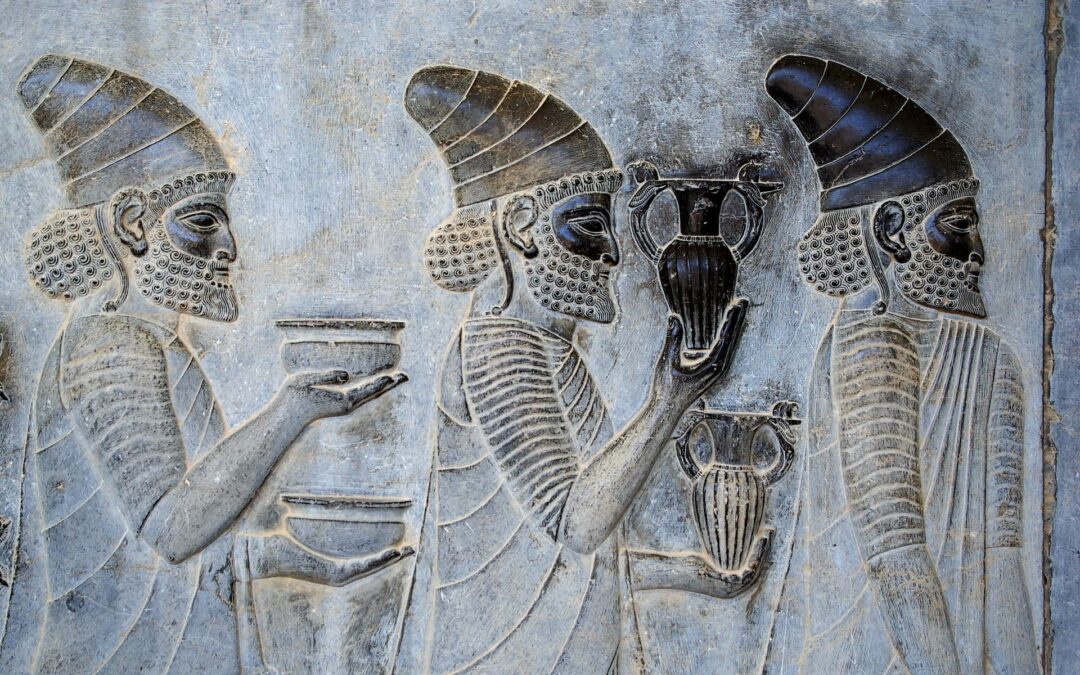
Eram is gone with all its rose,
And Jamshid’s seven-ringed cup, where, no one knows:
But still the vine her ancient ruby yields,
And still a garden by the water grows.—Adapted from the Rubaiyat of Omar Khayyam, trans. Edward FitzGerald
This mysterious epigraph starts the journey of The Golden Vine, and holds many clues about the book’s central themes.
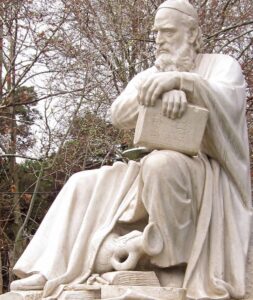
Edward FitzGerald’s translation of the Rubaiyat (quatrains) of Omar Khayyam, published in 1859, captured the imagination of the Victorian world with its exotic and picturesque depictions of ancient Persian wonders. The poet lived and died in medieval times, almost a thousand years ago, but long after the rise and fall of Alexander the Great and the Persian Empire that he conquered.
(Author Jai Sen also fondly recalls a restaurant named after the poet that his family used to frequent in Jakarta, Indonesia. This restaurant’s walls were covered with colorful murals that helped inspire Sen to an interest in Persian art and culture.)
Though Omar Khayyam lived long after the classical Persian period, his poems bring to life ancient figures and myths that were well known in the Persia of Alexander’s time. This particular quatrain reveals ideas that will anchor the entire trilogy of which The Golden Vine is the first book.
Eram (or Iram) is a mythical city of pillars built by a lost tribe. A cautionary tale, it could be an ancient precursor to the biblical story of the Tower of Babel. Legend has it that the city was destroyed by a divine storm to punish the arrogance of its builders. Alexander IV’s arrival at Persepolis in The Golden Vine hints at this as the young prince walks by the grand Hall of a Hundred Columns in his father’s imperial capital city. We see the precariousness of prince's situation, and also get hints of the gathering forces at work against him. Before Alexander IV is summoned to Persepolis, he is shown reading to his sisters from an unidentified text about a whirlwind god (which is later revealed to be the Maya creation story, the Popol Vuh). Unlike his counterpart in The Golden Vine, the historical Alexander destroyed Persepolis, one of a handful of historical elements that Sen changed to allow the alternate world shown in the book. These many images of creation, destruction, divine retribution, and returning divinity signal what we’re about to see in the story.
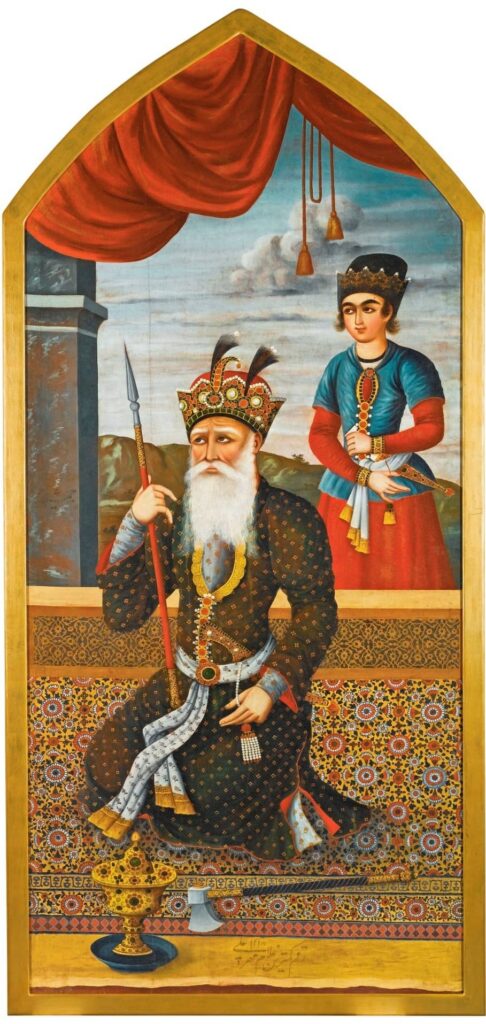
Jamshid’s cup is another image out of Persian legend. Jamshid (or Jamshyd) is a legendary Persian king who is thought to have ruled over a golden age. He was said to possess a mystical cup that gave him powers of clairvoyance and contained the elixir of immortality. Several capitals of the Persian Empire had nicknames associated with Jamshid. Persepolis was known as Jamshid’s throne. Ekbatana, a second Persian capital we don’t see in The Golden Vine but which becomes very significant in the upcoming second book in the trilogy, Jamshid’s Cup, was a city on a hill surrounded by seven multicolored ramparts, in imitation of Jamshid’s magical, grail-like, seven-ringed cup. The notions in the Jamshid legends of sight and seeing, oracular powers, and religious cults (all important themes in The Golden Vine) are also significant, in different ways, to the longer arc of Prince (now Emperor) Alexander IV.
The last two lines invoke the legendary golden vine of Darius, from which the book takes its name. They also hint at what the larger story of the trilogy itself is about and where it’s going. In a sense, it comes full circle: Hephaestion tells Alexander IV his recollections in the palace gardens in Persepolis. These gardens, where statues of the youthful Alexander and Hephaestion have been placed so that they stand side by side for all time, are the location of several pivotal scenes in the story. A lush paradise painstakingly and ingeniously carved out of the brutal desert, the gardens of Persepolis represent the sorts of futures that ambition and determination make possible—and also their transience and fragility, if they are not tended with the same care and brilliance that first created them.
On the topic of gardens, the upcoming second and third books of the trilogy consider the struggle between wild nature and the human desire to master it, as Alexander’s empire evolves after its famous founder’s original vision dies along with him. If the world is a garden (and the historical Alexander was known to have referred to it as one as he took in its many wonders), what could it grow into?