

The Golden Vine is faithful to recorded history, but only up to a point. The most compelling question posed by Alexander's life is "what if he had not died young and succeeded in his campaign to conquer the whole world?" Scholars agree that he could have, but few have imagined what that world would look like. Toward the end of his short life, Alexander was showing tendencies of becoming an explorer rather than focusing only on conquest, and his genius for administration and blending cultures is not fully recognized by history.
The question author Jai Sen is most often asked is, "how much of this is real, and how much of it is made up?" The answer falls in two categories.
First, Sen filled in gaps in recorded history, some of which are there due to Alexander's own actions. For example, Alexander was so stricken by grief after the historical Hephaestion's death that he may have had all records of his companion's mortal life destroyed, part of a process of trying to deify him. So we don't know who Hephaestion was, or where his family was from, just some tantalizing and puzzling clues.
Second, Sen changed three minor and three major events in Alexander's life to get a different outcome. In The Golden Vine, Hephaestion's recollections as an old man, told to Alexander's son Alexander IV, mostly hold true to recorded history until a specific turning point, where the story swerves into the alternate history that might have been if Alexander had lived.
Here is a sampling of some of the alterations that were made to set the stage for The Golden Vine.
| Recorded history | The Golden Vine |
|---|---|
| ? date unknown | 346 BCE |
| Hephaestion and Alexander become friends as boys (Hephaestion is presumed to have grown up in Macedon, but little information exists about his background). | 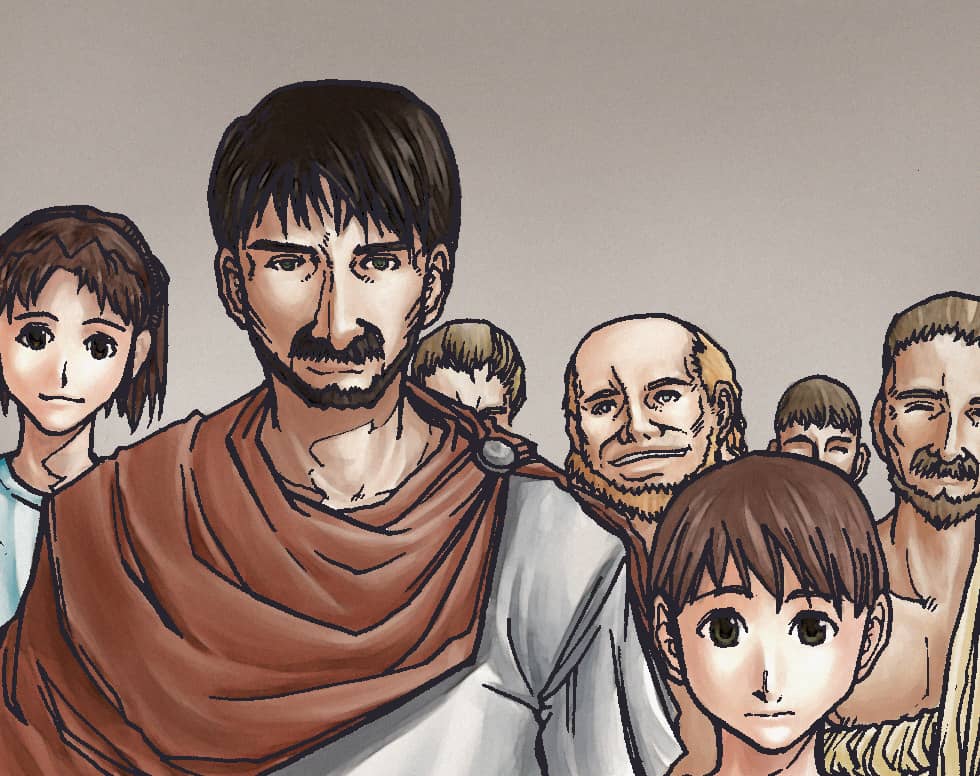 Hephaestion, who grew up in Athens as a servant, emigrates with his father to their ancestral homeland in Macedon. Alexander rescues Hephaestion from the torments of Macedonian boys who ridicule his Athenian accent, and the two become lifelong friends. |
| 338 BCE | 338 BCE |
| Alexander and his father Philip quarrel. Alexander flees Macedon with his mother Olympias to the kingdom of Epirus, indignant and fearing Philip's reprisal. | 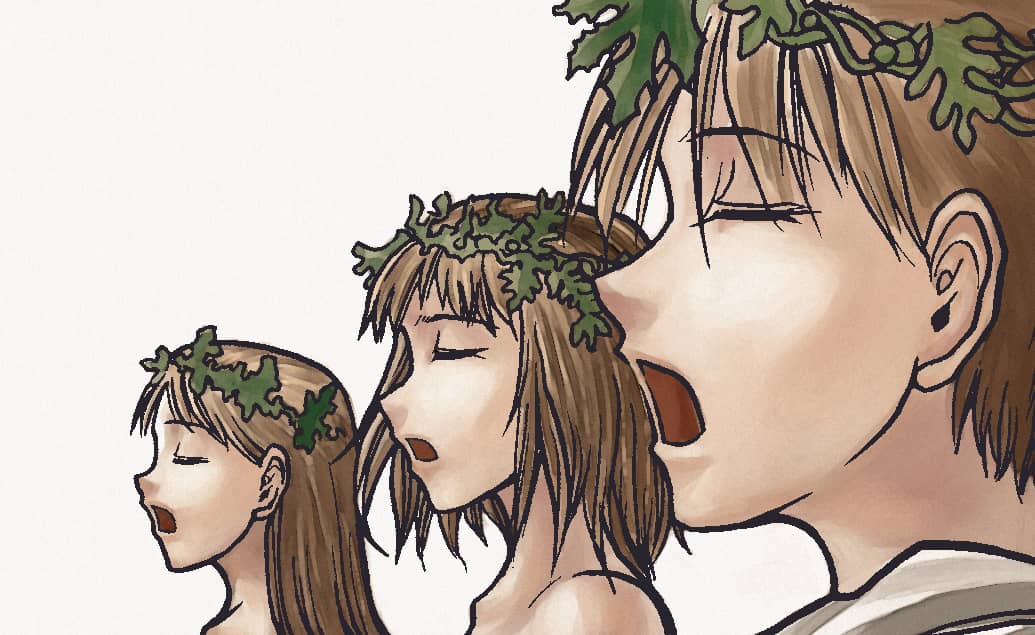 Alexander and Philip quarrel. Alexander and Olympias leave Macedon. Hephaestion accompanies them against the wishes of his father, who is loyal to Philip. Alexander, distraught and worried that he will be removed from his position as heir, goes to see the oracle of Dodona in Epirus; Hephaestion accompanies him. The oracle, which speaks through three priestesses, urges Alexander to follow the ancient teachings of the "sorceress from Greece." |
| 337 BCE | 337 BCE |
| Alexander and his mother are called back to Macedon by Philip, who pardons them. | Alexander, Olympias, and Hephaestion are called back to Macedon and receive a full pardon. They learn that Hephaestion's father has died during their absence, and Philip's pardon is issued out of pity for Hephaestion. |
| 336 BCE | 336 BCE |
| Alexander is thought to have gone to the Oracle of Delphi. The oracle's message is not known. |  Alexander goes to the Oracle of Delphi. Hephaestion accompanies him. The oracle's message is cryptic, but seems to indicate that Alexander must burn the capital of Persia (Persepolis) in order to achieve his aim of ruling the world, and warns against the treachery of his future heir. |
| 336 BCE | 336 BCE |
| Alexander's father King Philip is murdered at his daughter's wedding. Alexander takes control immediately, and partly as a result of this, Alexander and his mother Olympias are never fully cleared of suspicion. | 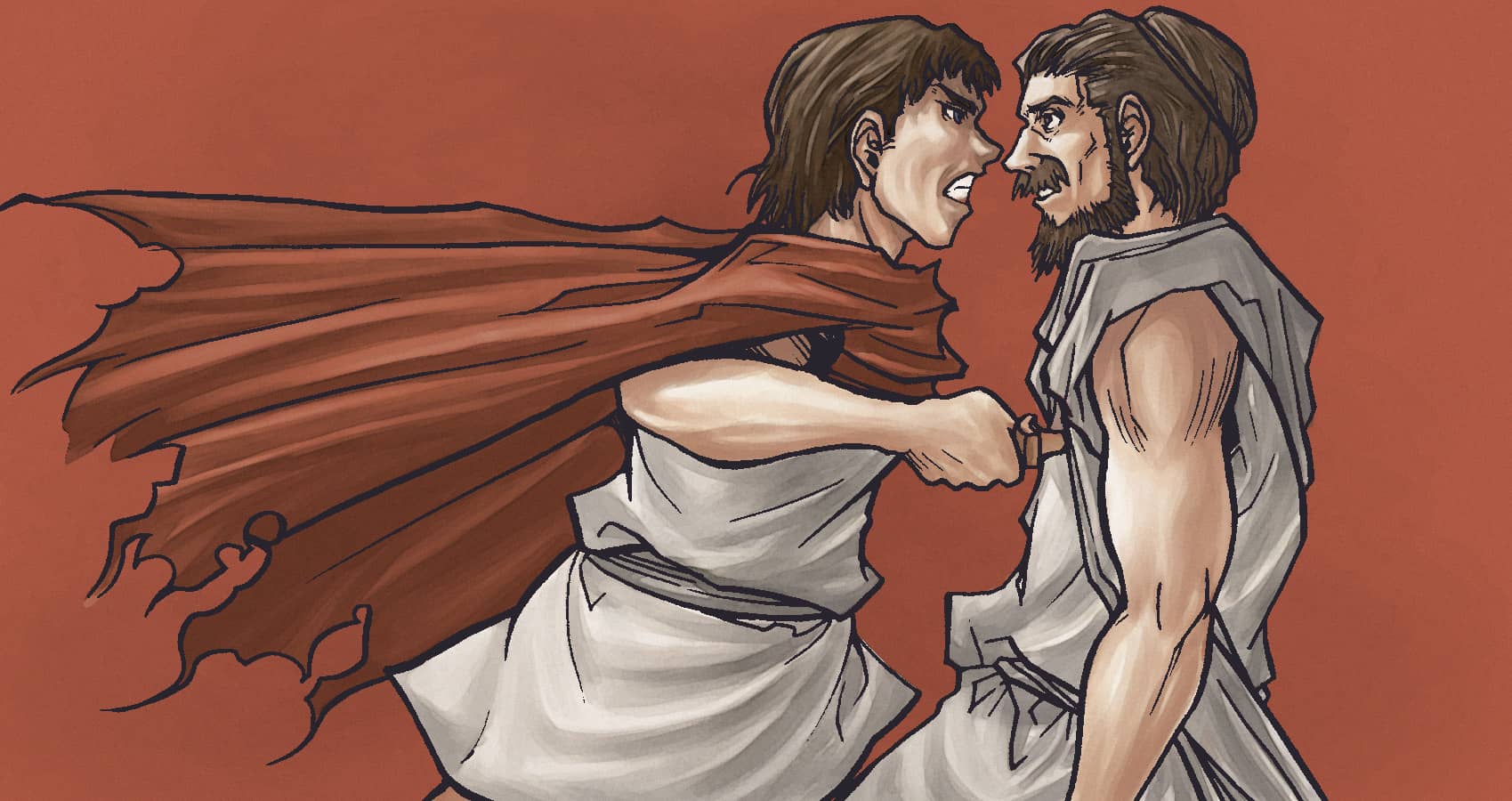 King Philip is murdered; Alexander is not involved, but he suspects his mother Olympias. Nevertheless, he wastes no time in taking power, and his great campaign is set in motion. |
| 331 BCE | 331 BCE |
| Alexander visits the Oracle of Zeus-Amon in Siwah, in the Lybian desert. The oracle's prophecy is not known, but most historians speculate that Alexander is told that he is of divine origins, which feeds the fires of his ambition and contributes to his growing instability. | 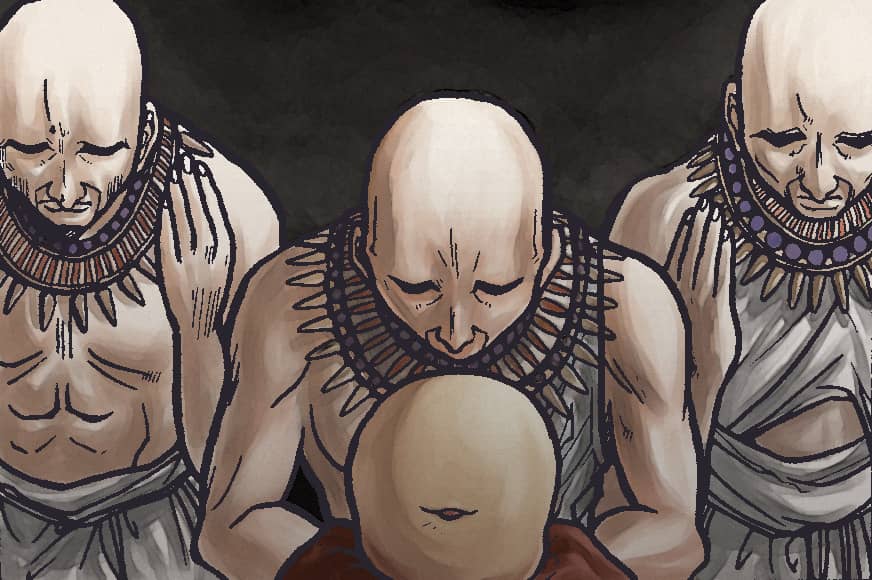 Alexander goes to the oracle of Zeus-Amon at Siwah with Hephaestion and some of his other close companions. Only Hephaestion is allowed to accompany Alexander into the oracle's chamber. The oracle tells Alexander it is his sacred duty to take the throne of Persia and to become a "god of the world, the lord of the sky." |
| 330 BCE | 330 BCE |
| Alexander's forces defeat Darius III, Great King of Persia, capture two of the four capitals of the Persian Empire, and storm into Persepolis. Alexander orders his troops to sack the city and loot its wealth, and sets fire to the magnificent royal palace himself. |  Alexander's forces overthrow Darius III, capture two of the four capitals of the Persian Empire, and reach Persepolis. A young eunuch is sent out to surrender the city. Alexander accepts his tribute, and orders his men not to destroy Persepolis... |
| 324 BCE | 324 BCE |
| Hephaestion dies. Alexander, driven nearly insane with grief, decides to push ahead with his campaign against the wishes of his troops, who insist on returning to Macedon. | Hephaestion is crowned Great King of Persia by Alexander, who returns to Macedon to plan out his campaign to conquer the rest of Asia. |
| 323 BCE | 323 BCE |
| Alexander dies after a mysterious illness. His Indian campaign has been a failure and his forces are on the verge of mutiny. | Alexander writes to Hephaestion from India, telling him of his successful conquest of the entire Indian subcontinent, and his plans to invade China. News of other territories unknown to the Greeks begins to reach Alexander... |